For many Green Bay homes, a full asphalt shingle roof replacement lands somewhere between roughly $8,000 and $18,000. Bigger houses, steeper roofs, metal roofing and complicated rooflines can push the number well above that. Treat these figures as a rough guide to the wider market, not a quote from this business. The only real price is one written after someone has looked at your roof.
What drives the price of a new roof in Green Bay?
Roofing is priced by the work involved, and a handful of factors explain most of the difference between one quote and another.
- Roof size. Roofers measure in squares, where one square is a hundred square feet of roof surface. More squares mean more material and more labor.
- Pitch and height. Steep roofs and two-story houses take more time and safety equipment.
- Material. Asphalt shingles, metal, slate and synthetic products sit at very different price points.
- Complexity. Dormers, valleys, chimneys and skylights all add cutting, flashing and time.
- Condition underneath. Rotted deck boards must be replaced before the new roof goes on.
- Tear-off and disposal. More layers of old roofing mean more labor and more dumpster space.
A simple ranch house and a tall older home with three dormers can differ by thousands of dollars, even if the floor areas look similar from the street.
How do roofing materials compare on price?
Material is the biggest choice you control. Here is how the main options usually line up as a rough guide.
- Three-tab asphalt shingles. The lowest cost, with a shorter life. Less common now.
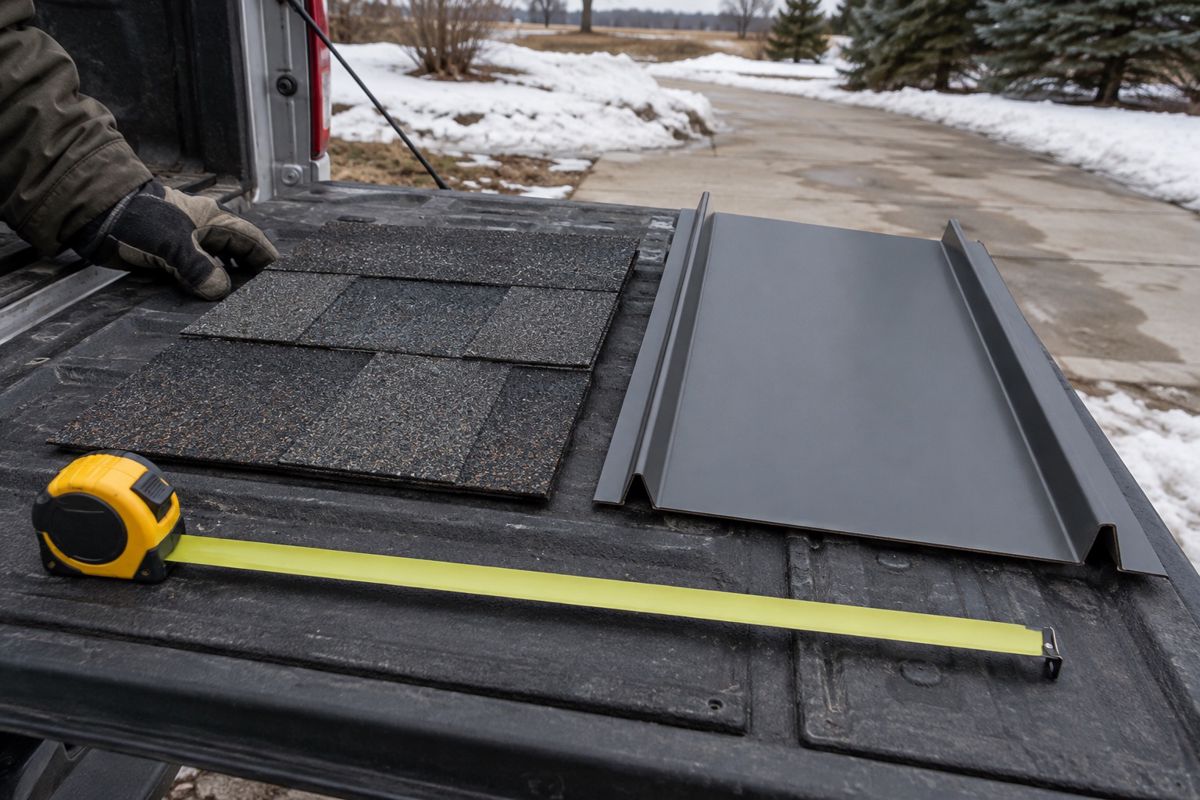
- Architectural asphalt shingles. The usual choice for Wisconsin homes. Many installed roofs fall somewhere around $4 to $9 per square foot of roof surface, depending on the factors above.
- Standing seam metal. Often costs roughly double the price of shingles or more, but sheds snow quickly and can last much longer.
- Slate, cedar and synthetic lookalikes. Premium products with premium pricing, and some need stronger framing because of the weight.
Cheaper is not always better in a cold climate. A roof that handles snow, ice and wind well can cost less over its lifetime than a low-priced one that needs early repair.
Why does Wisconsin weather add to the cost?
Green Bay winters shape how a roof should be built, and that shows up in the quote.
Ice and water barrier
Snow melts on the warm part of the roof and refreezes at the eave, forming ice dams. A self-adhering barrier along the eaves and in valleys is common practice in snow country. It costs extra, but it protects the deck if water backs up.
Ventilation and insulation
A cold, well-ventilated attic keeps the roof surface even and reduces ice damming. If your attic vents are poor, adding them is money well spent, and it can show up as a separate line in the quote.
Snow load and framing
Heavy, wet snow adds real weight. If the deck is soft or the framing shows stress, repairs come before roofing. Ask your contractor to note anything they see.
Scheduling
Late spring through early fall is the easiest time to roof here. Busy weeks can mean waiting, and winter work can add complications.
What extras can show up on a roofing quote?
Beyond shingles and labor, a thorough quote may list items such as:
- Deck repair or replacement, usually priced per sheet or per board.
- New flashing at chimneys, walls and valleys.
- Pipe boots, vents and ridge ventilation.
- Drip edge and gutter apron.
- Skylight curb work or replacement.
- Permit fees, if your village or city requires a permit for the job.
- Dumpster and disposal.
If a quote leaves these out, ask whether they are included, extra or not needed. A low total with a long list of exclusions can end up costing more than a fuller quote.
Does insurance cover a new roof?
Usually only when the damage is sudden, such as hail, wind or a fallen tree. Normal aging and wear are generally not covered. Deductibles differ, and some Wisconsin policies carry a separate wind or hail deductible, so read your policy. If you think a recent storm damaged your roof, photograph it and call your insurer before you sign a contract. Our page on storm and hail damage explains the usual steps.
How do you compare roofing quotes fairly?
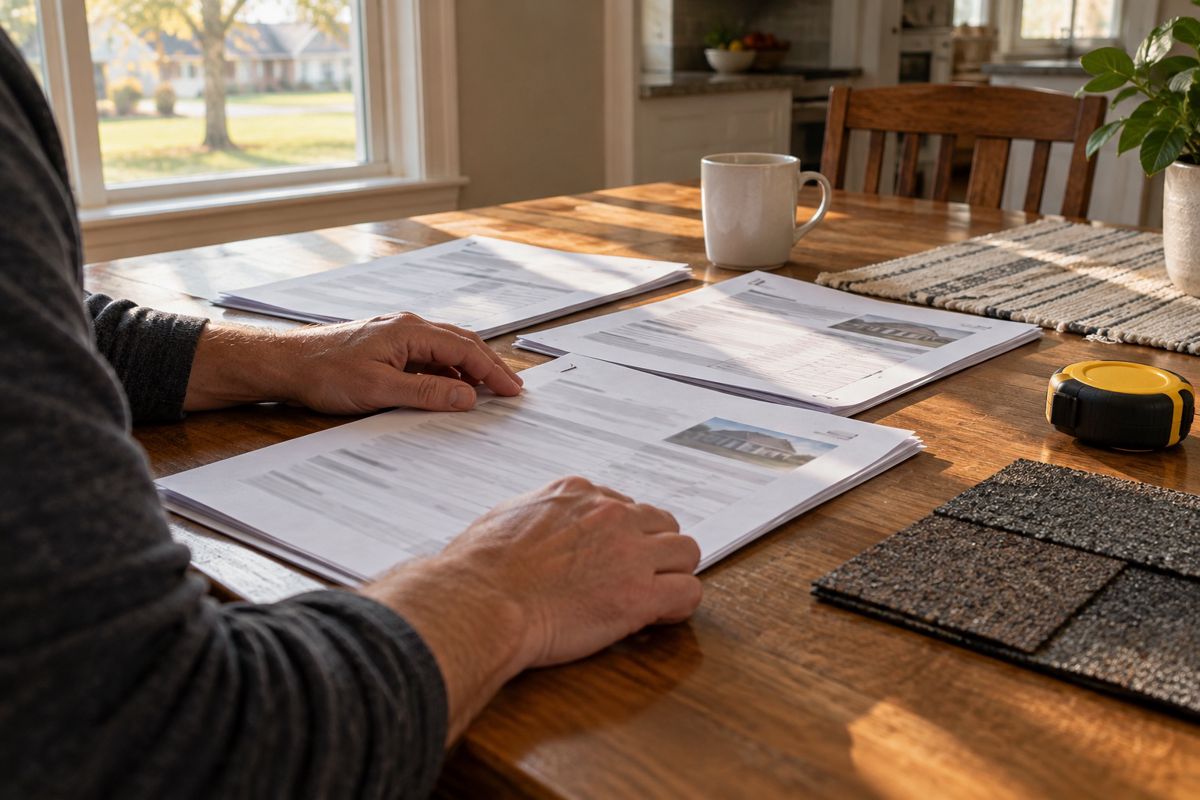
Get at least two or three quotes, and make sure they cover the same work. Then compare line by line.
- Is the tear-off included, and how many layers?
- Which shingle line and color, and which underlayment?
- Is an ice and water barrier included, and how far up the roof does it go?
- How is deck repair priced if boards are found rotted?
- Who pulls the permit and handles cleanup?
- What warranty comes with the materials and with the labor, in writing?
Ask each contractor to show their credentials and proof of insurance, and check what Wisconsin requires for work on homes. Be careful with anyone who wants a large payment up front or pressures you to sign the same day.
When should you call a roofer?
Call when you see curling or missing shingles, stains on the ceiling, daylight in the attic or ice dams winter after winter. If you are not sure the roof is ready for another season, start with a roof inspection so you know where you stand. If the answer is a new roof, our page on roof replacement in Green Bay explains the process, from tear-off to cleanup, and what to ask before you sign. Plan ahead if you can. A roof you choose to replace in good weather is almost always easier and cheaper to manage than one you replace in a hurry after it fails.