
Skip to content
Clear communicationFree inspections
Call now (920) 555-0169
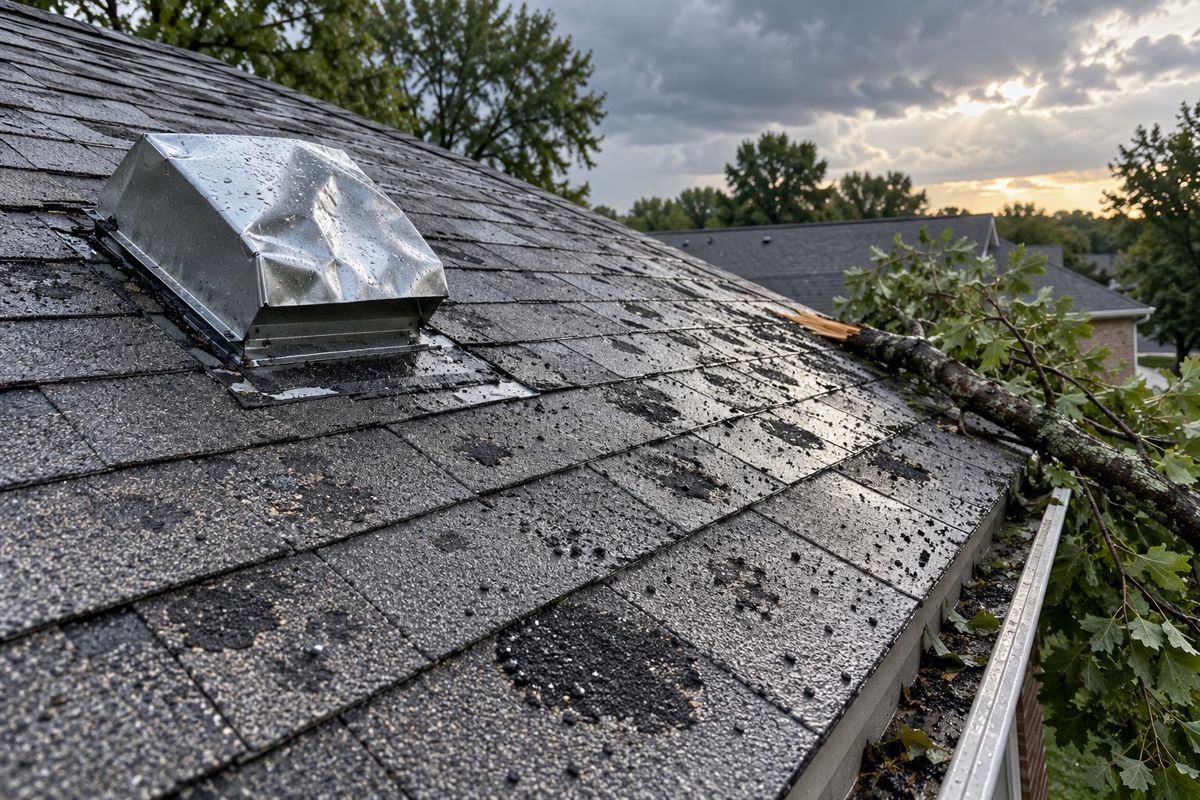
Hail marks and a fallen branch on a gray shingle roof

Storm and hail damage in Green Bay

Storm damage roof repair in Green Bay after hail and wind

Know what to look for, what to photograph and what to ask before anyone climbs your roof.

  • Hail, wind and fallen-branch damage
  • Photos and notes for your insurer
  • Clear written repair scope

Step 1 of 3

What do you need?

What does storm damage look like on a Green Bay roof?

Storm damage is not always dramatic. Some of the worst problems are small and only show up later as a leak.

  • Hail bruises. Dark, soft spots where granules are knocked off and the mat underneath is cracked.
  • Wind damage. Shingles that are creased, lifted or missing, often along ridges, edges and corners.
  • Impact damage. Dents or punctures from branches and debris.
  • Metal and gutter dents. Soft metal on vents, drip edge and gutters often shows hail first.
  • Granules in downspouts. A heavy pile of grit at the bottom can point to hail wear.

You can often see some of this from the ground or from an upstairs window. Do not climb onto the roof yourself. A roofer can check closer and tell the difference between storm damage and ordinary aging, which matters when an insurer asks.

What should I do right after a storm?

Safety comes first, then paperwork.

  1. Stay off the roof and away from fallen power lines, and keep people clear of damaged areas.
  2. If water is coming in, move belongings, put out buckets and protect what you can. Ask a roofer whether temporary protection such as a tarp is possible.
  3. Take dated photos of the roof, gutters, siding, windows and yard from the ground.
  4. Write down the date, the type of storm and what you saw.
  5. Call your insurance company to ask how to open a claim.
  6. Get a written roof assessment before agreeing to any repair contract.

After big storms, door-to-door sales crews often appear. Take your time, ask for credentials and do not sign anything under pressure.

How does a storm damage claim usually work?

Every policy is different, so read yours. In general, the process looks like this. You report the damage and an adjuster inspects the roof. The insurer decides what is covered and sends an estimate, often minus your deductible. Some Wisconsin policies use a separate, higher deductible for wind or hail, sometimes as a percentage of the home value, so check the wording.

A roofer can give you a written scope and photos that show what they found. If their estimate differs from the adjuster's, they can usually explain why and provide documentation for a review, though the insurer makes the final call. Be careful with anyone who promises to get your claim approved or offers to cover the deductible. Neither is something a contractor should promise.

If the damage turns out to be minor, a simple roof repair may be all you need. If it is widespread, the answer may be roof replacement.

Summer thunderstorms are the main source of hail and straight-line wind in northeast Wisconsin. They can arrive quickly, and the damage may be patchy, with one street hit hard and the next barely touched.

Winter has its own risks. Heavy, wet snow adds weight, ice storms coat branches until they snap, and high winds can drive snow under loose shingles or flashing. Falling limbs from mature trees are a common cause of punctures in older neighborhoods around Allouez, De Pere and the east side.

None of this means every storm needs a roofer. It does mean that after a severe event, an inspection is worth the time, especially if your roof is already older.

How long do storm repairs take and what should I expect?

Small fixes, such as replacing a handful of shingles or a vent, can be quick once the crew is there. Larger jobs depend on the amount of damage, material supply and weather. After a widespread storm, roofers get busy and lead times stretch, so be ready to wait.

Expect the crew to inspect, photograph and write up the damage first. Ask for the scope and the materials in writing. If the roof is leaking while you wait, ask what interim protection is possible and keep your own photos of the progress.

When the work is finished, keep the invoice, photos and any warranty paperwork. Your insurer may ask for them. For a fuller condition check, see roof inspection, or head back to the home page for other services.

How it works

1

Call or request a quote

Tell us what is happening with the roof.

2

Free inspection

A roofer checks the roof and gives a written price.

3

Work done right

Clean crew, nail sweep, warranty in writing.

  • Clear communication
  • Free inspections
  • Written estimates
  • Local crew

Step 1 of 3

What do you need?

Questions about roofing in Green Bay

How can I tell if hail damaged my roof?

Look for dark spots where granules have worn off, soft or cracked spots when pressed from above by a roofer, dented vents, dented gutters and granules in the downspouts. Damage is often hard to see from the ground. A written assessment with photos is the best evidence if you need to talk to your insurer.

How long do I have to report storm damage?

Policies set their own deadlines for reporting a loss, and some are strict. Report as soon as you notice damage, even if you are still gathering information. Your insurance company or agent can tell you the time limits for your policy. Waiting can also let a small leak grow into interior damage.

Should I put a tarp on my roof myself?

No. Climbing onto a damaged roof is dangerous, especially in wet or icy conditions. Protect belongings inside, collect drips and ask a roofer whether a temporary cover is possible. Keep receipts for emergency materials and photograph the damage first, because insurers often ask for both.

Will insurance cover my storm damage?

It depends on your policy and the cause. Sudden damage from hail, wind or a fallen tree is more often covered than wear and age. Your deductible and the roof's age can also affect the payout. Read your policy and ask your insurer direct questions. A roofer can document the damage but cannot decide coverage.

What if the adjuster and the roofer disagree?

It happens. Ask the roofer for photos and a written explanation of what they found, and ask the adjuster what the estimate includes. Many insurers have a process for a second look. Stay polite, keep records and make sure any change in scope is written down. The final decision on coverage rests with the insurer.

Is every door-knocking roofer after a storm a scam?

Not every one, but caution is wise. Ask for credentials, proof of insurance and local references, and check how long the business has been operating. Do not sign a contract on the doorstep, do not pay a large deposit up front and be skeptical of promises about your claim. A reliable roofer will not mind you taking time.

Ready when you are Call now or request a quote online. Call for a free inspection Get my free quote (920) 555-0169