Skip to content
Clear communicationFree inspections
Call now (920) 555-0169
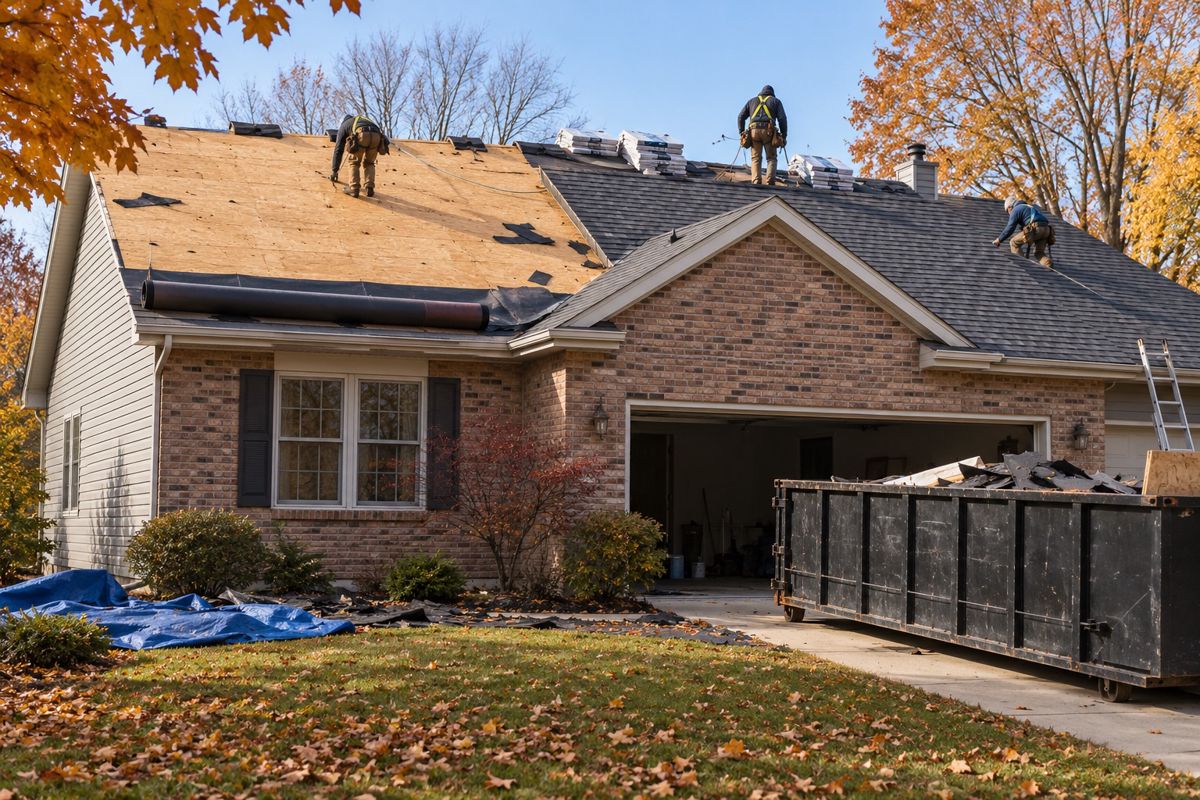
Partly finished roof replacement with new shingles beside bare deck

Roof replacement in Green Bay

Roof replacement in Green Bay for a Wisconsin winter

A new roof should shed snow, handle ice and last. Here is how a replacement works and what to ask before you sign.

  • Tear-off, deck check and new roof
  • Ice protection for snow country
  • Written quote with scope and materials

Step 1 of 3

What do you need?

When is roof replacement in Green Bay the right call?

A roof does not fail all at once. It wears out slowly, and the signs show up in the yard and in the attic before they show up on the ceiling. If you are searching for roof replacement in Green Bay, one or more of these is usually the reason.

  • Shingles that are curling, cracking or shedding granules, which you may find in the gutters.
  • Leaks in more than one spot, or a repair that keeps coming back.
  • Daylight or damp insulation in the attic, or a sagging stretch of roof deck.
  • Ice dams every winter, with water backing up under the shingles.
  • A roof that has reached the end of the life its maker expected.

Asphalt shingle roofs in cold climates often wear out sooner than the label suggests, because of repeated freezing and thawing. A roof inspection is a sensible first step if you are unsure. Sometimes a repair is the honest answer. Sometimes it only delays the bill.

What does a roof replacement involve from start to finish?

A proper replacement is more than new shingles laid over old ones. The usual steps are:

  1. Protect the property. Tarps go over plants and the ground beside the house, and the gutters are checked.
  2. Tear off the old roofing down to the deck. Many crews avoid a second layer on top of the first, because it hides rot and adds weight.
  3. Inspect the deck and replace soft or damaged boards.
  4. Install an ice and water barrier along the eaves and in valleys. In snow country this is common practice and worth asking about.
  5. Lay underlayment, flashing and vents, then the shingles or other roofing material.
  6. Clean up, sweep for nails and do a final walk-around.

Ask who handles the dumpster, how attic ventilation will be improved and what happens if the deck needs more work than expected. A good written quote answers those questions before the crew arrives.

What roof problems are common on Green Bay homes?

Winter does most of the damage. Snow that melts on a warm roof and refreezes at the cold eave forms an ice dam. The trapped water can back up under shingles and soak insulation and ceilings. Weak attic ventilation and thin insulation make it worse.

Snow load is the second issue. Wet, heavy snow can sit for weeks. Roofs with older framing, long spans or additions can show stress. If you see ceiling cracks, sticking doors or a visibly dipping roof line, get it looked at before the next big storm.

Then there is summer. Hail and strong wind can bruise shingles and lift edges, which sets up leaks months later. Many homes in Green Bay, Allouez and De Pere are older, with several roof planes, dormers and chimneys. Each valley and flashing point is a place where careful installation matters. Our storm and hail damage page explains what to do after a bad storm.

Nobody can give an honest price without seeing the roof. These are the things that move the number most.

  • Size and pitch. Bigger and steeper roofs take more material and more time, and steep roofs need extra safety gear.
  • Material. Asphalt shingles usually cost less than metal, slate or synthetic products.
  • Complexity. Dormers, valleys, skylights and chimneys add labor and flashing.
  • Deck condition. Rotted boards are replaced as needed, so a quote should say how that is priced.
  • Layers and tear-off. More layers mean more disposal work.
  • Ventilation and ice protection. Extra vents and a wider ice barrier cost more but suit a cold climate.

Get the quote in writing, with scope, materials and exclusions spelled out, and compare quotes that cover the same work.

How long does a roof replacement take and what happens on the day?

Many single-family roofs can be finished in one to three days once the crew starts, but size, weather and the amount of deck repair can change that. Treat any schedule as an estimate. Roofing is weather work, and wind, rain and snow can push a start date back.

On the first day expect noise, a dumpster or trailer in the driveway and a crew moving quickly on the roof. Move cars out of the driveway, take down anything hanging on walls that share space with the attic and keep children and pets away from the work area. Mention sprinkler heads, satellite dishes or solar equipment before work begins.

When the job is done, walk the property with the crew lead and look at the ridge line, the chimney flashing and the gutters. Call early if you notice stains, sagging or water in the attic afterward. Small problems grow in a Green Bay winter. Back to the Green Bay roofing home page for the other services.

How it works

1

Call or request a quote

Tell us what is happening with the roof.

2

Free inspection

A roofer checks the roof and gives a written price.

3

Work done right

Clean crew, nail sweep, warranty in writing.

  • Clear communication
  • Free inspections
  • Written estimates
  • Local crew

Step 1 of 3

What do you need?

Questions about roofing in Green Bay

How much does a roof replacement cost in Green Bay?

It depends on the size and pitch of the roof, the material, the number of layers to remove, the condition of the deck and how complex the roofline is. Any figure given before someone sees the roof is a guess. Ask for a written quote from at least two contractors that covers the same scope, so the numbers are easy to compare.

Can new shingles go over the old roof?

Some codes allow a single overlay in certain cases, but in snow country a full tear-off is usually the better path. A second layer hides rot, adds weight and can shorten the life of the new shingles. Ask your roofer what the local code allows and why they recommend one approach over the other, and get the answer in the quote.

What time of year should I replace my roof?

Late spring through early fall is the easiest window in Wisconsin. Shingle sealing strips bond better in mild weather and the days are longer. Roofers get busy in those months, so plan a few weeks ahead. A winter replacement can happen on a dry day, but cold weather makes materials harder to handle.

Do I need a permit to replace my roof?

Many Wisconsin municipalities require a permit for a full replacement, though rules differ between cities, villages and towns. Ask the roofer who applies for it and whether the fee is in the quote. If you are not sure, a quick call to your local building inspection office will settle it before work starts.

Will insurance pay for a new roof?

Policies usually respond to sudden damage such as hail or wind, not to normal wear and age. What is covered, how the deductible works and whether the roof is paid at current or depreciated value all depend on your policy. Read it, photograph the damage and call your insurer before signing a contract.

Which roofing material suits Green Bay winters?

Architectural asphalt shingles are the most common choice and handle cold well when installed with an ice barrier and good ventilation. Metal roofing sheds snow quickly and can last long, though it costs more up front. Ask each contractor how the material copes with snow, ice and wind here, and what warranty comes with it.

Ready when you are Call now or request a quote online. Call for a free inspection Get my free quote (920) 555-0169