Skip to content
Clear communicationFree inspections
Call now (920) 555-0169
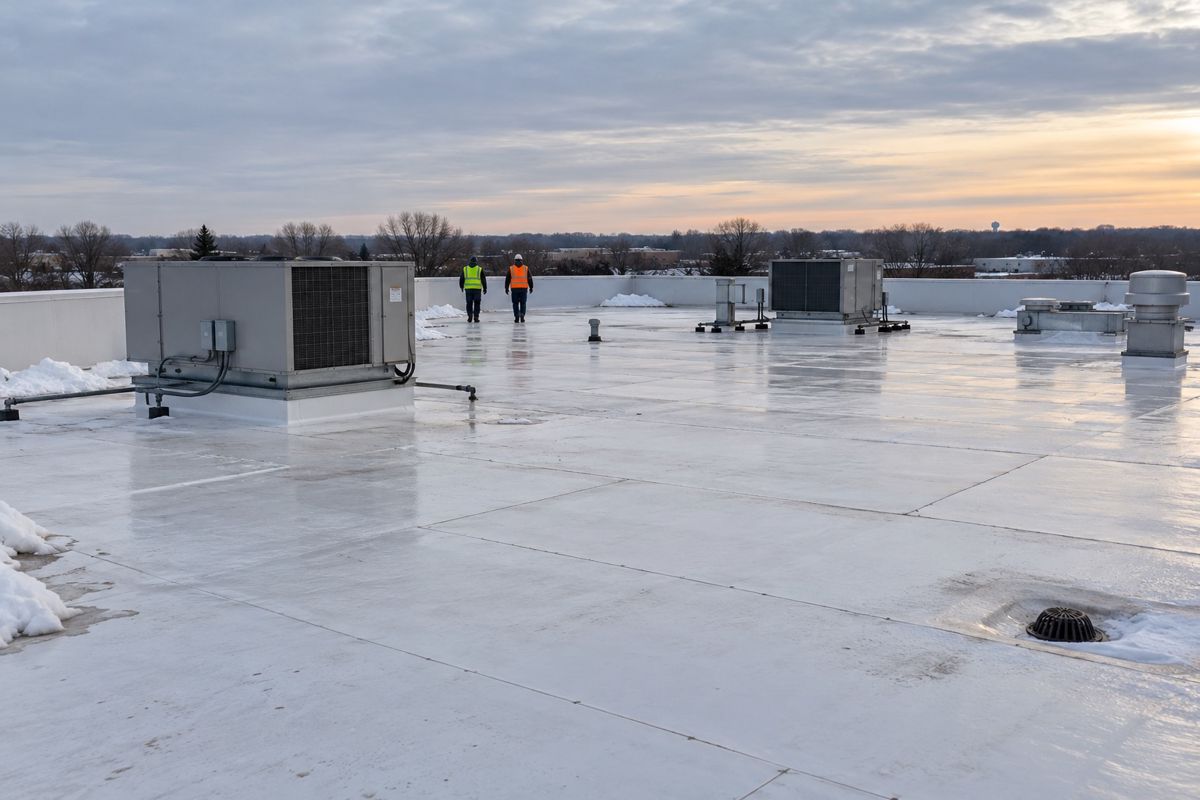
White membrane flat roof with rooftop units on a warehouse

Commercial roofing in Green Bay

Commercial roofing in Green Bay for flat and low-slope roofs

Warehouses, shops, offices and multi-unit buildings need roofs that drain, carry snow and keep the business dry.

  • Flat and low-slope roof systems
  • Drainage and snow load planning
  • Work scheduled around your operations

What types of commercial roofs are common in Green Bay?

Most commercial buildings in the area use one of a few roof systems. Each has strengths, and the right one depends on the building, the budget and how long you plan to keep it.

  • TPO and PVC. Single-ply white membranes with heat-welded seams, common on newer flat roofs.
  • EPDM. A rubber membrane, often black, used for many years on commercial buildings.
  • Modified bitumen. Rolled asphalt layers with reinforcement, used on low-slope roofs.
  • Built-up roofing. Layers of felt and asphalt, sometimes with gravel on top, found on older buildings.
  • Metal panels. Common on industrial buildings and some retail, with steeper slopes that shed snow.

Many commercial roofs sit on large flat sections with parapet walls, rooftop units and drains. Each of those details is a possible leak point, so ask any contractor how they handle them.

What problems do flat roofs have in a Wisconsin winter?

Flat and low-slope roofs do not shed water by gravity as fast as a pitched roof, so small flaws matter more.

Ponding water

Water that stays for more than a day or two can stress the membrane. In winter it freezes and thaws repeatedly.

Clogged drains and scuppers

Leaves, debris and ice can block drainage and send water into the wrong places.

Snow load

Deep snow, rain on snow and drifts against parapets or rooftop units add weight. Building owners should know the design limits of their roof and have it checked after heavy winters.

Seams, flashing and penetrations

Cold makes membranes contract. Seams, edges and flashing around pipes and units are common places for cracks and leaks.

Repair, coating or full replacement for a commercial roof?

The right answer depends on the condition under the surface, not only what you see from above.

A repair suits local damage such as a split seam, a failed flashing or a puncture. Regular maintenance, including drain cleaning and seam checks, can extend a roof's useful life and cut the chance of surprises.

A restoration coating can sometimes extend the life of a sound roof, but only when the insulation and deck are dry. Moisture surveys help establish that. If the insulation is wet or the membrane is failing across large areas, replacement is usually the sensible path.

For smaller leaks, see roof repair and leak detection. For a baseline picture of your roof's condition, a roof inspection is a useful start, especially before a lease, a sale or a budget meeting.

Commercial roofing is priced by scope, so a site visit comes first. These are the main factors.

  • Roof area and how many separate sections there are.
  • The system you choose and the thickness and warranty of the membrane.
  • Whether old layers and wet insulation must be removed.
  • Insulation level and the slope needed to drain water.
  • Rooftop units, skylights, drains and parapet walls that need detailed flashing.
  • Access, crane or hoist needs and working hours.
  • Local code requirements and permits.

Ask for a written proposal that lists each item and what is not included. If you run a business with tight cash flow, ask about phased work, and be clear about what the roof can safely wait for.

How do you keep the business running during a roofing job?

Most commercial roofs can be repaired or replaced while the building stays in use, but it takes planning. Ask the contractor to explain the sequence, how they will protect the interior and where they will stage materials and equipment.

Think about noise, fumes and access. Parking areas, loading docks and entrances may need to be fenced or rerouted for a time. Tell tenants and staff in advance, and make sure rooftop equipment like HVAC units and exhaust fans is protected. Ask how the crew will deal with weather, since an open roof must never be left unprotected overnight.

Keep records of the work and any warranty paperwork. They can matter for insurance, lenders and future buyers. Return to the Green Bay roofing home page for the full list of services.

How it works

1

Call or request a quote

Tell us what is happening with the roof.

2

Free inspection

A roofer checks the roof and gives a written price.

3

Work done right

Clean crew, nail sweep, warranty in writing.

  • Clear communication
  • Free inspections
  • Written estimates
  • Local crew

Step 1 of 3

What do you need?

Questions about roofing in Green Bay

How do I know if my commercial roof needs replacing?

Warning signs include repeated leaks, wet insulation, large blistered or cracked areas, standing water that lasts days and seams pulling apart. A moisture survey or a written condition report from a roofer helps separate a repairable roof from one at the end of its life. Do not rely only on how the surface looks.

Can the building stay open during a roof replacement?

In many cases yes, with planning. The contractor needs to protect the interior, control access and schedule noisy work around business hours where possible. Some tenants may choose to move sensitive equipment. Ask for a written plan and talk to the contractor about weather contingencies before work begins.

What roof system is right for a flat roof in Wisconsin?

There is no single answer. TPO, PVC, EPDM and modified bitumen are all used in cold climates when installed well. Insulation, drainage and detailing matter as much as the membrane. Ask each contractor to explain why they recommend their system for your building and what warranty comes with it.

How often should a commercial roof be inspected?

A common recommendation is a check at least twice a year, usually in spring and fall, plus after severe weather. This catches clogged drains, seam damage and small leaks before they spread. Keep the reports in a file. They help with warranty claims and show insurers and lenders that the roof is maintained.

Who is responsible for the roof on a leased building?

It depends on the lease. Some leases make the landlord responsible for the roof structure, while others pass maintenance to the tenant. Read the lease or ask the property manager before you commission work. A written condition report can also help settle questions about when damage started.

Ready when you are. Call now or request a quote online.

Call for a free inspection